Compression Packing
- May 27, 2021
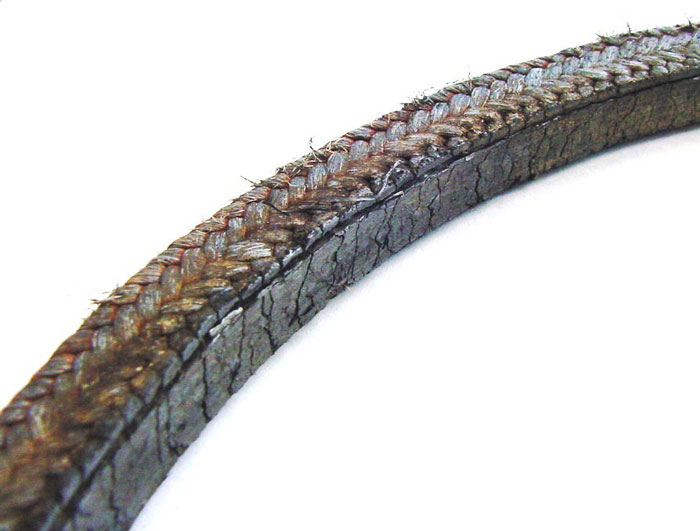
GFS General Service Packing is designed and manufactured to work across a wide range of dynamic rotary and reciprocating sealing environments. Materials below contain a variety of patented fiber-infused PTFE yarns with graphite, other impregnated fillers.
These materials offer greater strength with fewer braid unraveling problems, and long life in abrasive situations. Surface lubricant allows for easier run-in, and a reduction in shaft and sleeve wear lowers operational costs. Most importantly versatile, multi-use packing means lower inventory stocking costs.
This blog will discuss 6 different types of general service compression packing in order to assist you with proper selection for your application.
- April 20, 2021
Style 1303-FEP Packing resists heat, pressure and chemicals. It's compliant with the most stringent VOC and VHAP emissions regulations.
Garlock Style 1303-FEP combines the low emissions performance of engineered sets with the flexibility and convenience that comes with spool stock compression packing.
Specifications of Style 1303-FEP
- Min. Temperature: -328°F / -200°C
- Max. Temperature: 850°F / 455°C (1,200°F / 650°C Steam)
- Max. Valve Pressure: 4,500 psi / 310.3 bar
- Min. Temperature: -328°F / -200°C
- March 05, 2021
Installing compression packing into stuffing boxes is often not carried out correctly, reducing the life of the product and causing unnecessary leakage. In this two-part blog, we will give you tips to follow for correctly installing compression packing, helping to ensure a trouble-free installation and maximum packing service life.
Tip #1: Select the Optimal Packing Style
Too often, when installing compression packing, the incorrect packing is selected and installed. A variety of factors need to be considered including the following:
- Type of equipment (i.e., pump, valve, etc.)
- Condition of equipment
- Physical and chemical characteristics of the medium/media
- Temperature and pressure of the medium/media
- Shaft rotating speed
- October 01, 2020
Abrasive media comes in many forms—from mining slurries to wood pulp and even substances as seemingly mild as liquid chocolate. This diversity rules out a one-size-fits-all solution for abrasive pumping applications. However, today’s broad range of materials, from carbon fiber packing to graphite-filled polytetrafluoroethylene (PTFE) bushings, includes products capable of meeting an equally broad range of abrasive wear requirements.
Carbon Fiber Packing
Few materials offer the abrasive resistance and heat dissipation of carbon fiber yarns. Braided compression packing made from this material excels under extreme conditions, including exposure to a variety of chemicals, temperatures approaching 850 F (454 C) in oxygen-rich atmospheres (up to 1,200 F/649 C in steam) and shaft speeds in excess of 4,000 feet per minute (fpm).
The strength of carbon fiber yarns combined with their ability to draw heat from pump shafts make them the material of choice for resisting abrasive wear. Unfortunately, they do not seal as well as graphite foil packing. Upon closer examination, however, the speed and temperature capabilities of these two materials are similar.
Consider this hypothetical scenario: An abrasive pumping application is under control using carbon fiber, except for excessive leakage across the packing set. Depending on the nature of the leaking media, it may not be desirable to have it pooling on the plant floor. Even if it is just water, excessive leaking media is lost profit. If the leakage is clean, the carbon fiber packing is effectively excluding abrasives.
Carbon Fiber Rings and Foil Packing
When dealing with clean media, graphite foil packing becomes an option. At a subsequent repacking, it may be advisable to use just two carbon fiber rings in the bottom of the stuffing box and use graphite foil packing for the remaining rings.
- August 20, 2020
Galvanic corrosion is an electrochemical process that occurs between two dissimilar metals, or between a metal and a conductive non-metallic material, when both are exposed to an electrically conductive media. In the case of a packing gland, it occurs between a metal component and the carbon or graphite packing. Under these conditions, the material that is closest to the anodic end of the galvanic scale will be corroded in preference to the one that is closest to the cathodic end of the scale. (See Table 1.) As the distance between materials on the galvanic scale increases, a corresponding rise occurs in the rate and the extent of the corrosion.
In a valve or a pump using packing made of either graphite or carbon, a galvanic reaction may be initiated as soon as any electrically conductive fluid, such as water, is introduced. Since graphite is more cathodic than the metals that make up valves and pumps, it is the metal that may be subject to corrosive attack.
Liquid Phase Needed
Even though a valve or pump may be packed with a graphite or carbon packing, many cases exist in which the metal parts will not be subjected to galvanic corrosion. For example, an electrically conductive fluid in a liquid state must be present for the galvanic reaction to take place. The temperature of a superheated steam valve prevents the accumulation of any significant amount of water, thereby nullifying the possibility of galvanic corrosion.
Stainless Steels
Another example of when galvanic corrosion protection may not be necessary is when the equipment is constructed of austenitic stainless steels (e.g., 300 series, 630, etc.). These stainless steels are much more resistant to galvanic attack.
On the other hand, the martensitic stainless steels (e.g., 400 series) are highly susceptible to galvanic attack. If a valve or pump is constructed of martensitic stainless steel and if it will be exposed to an electrically conductive fluid for any period of time, then consideration should be given to incorporating a galvanic corrosion inhibitor system into the carbon or graphite packing sets used to seal it.
When Are Corrosion Inhibitors Needed?
- July 31, 2020
Successful fluid sealing of valves and pumps cannot be accomplished without the appropriate sealing device. Whether using mechanical seals or compression packing, one must understand the specific needs of the application.
While mechanical seals in general are considered the superior sealing device, they are more expensive and less versatile than compression packing. Compression packing is more versatile due to the vast selection of materials used to make it and the various ways it is constructed. Materials such as vegetable fibers, man-made fibers, metals, graphite, and hybrids are all used to make packing. Construction types include braided, twisted, wrapped (rolled, folded), extruded, laminated, bulk, and die formed.
Construction types of compression packing each have variations within. This article will focus on braided packing. The most common braiding styles are square braid, round braid, twisted braid, braid-over-core, and lattice (interlock) braid.
Square Braid
The majority of braid types covered in this article are described by a geometric shape. One of the most common braids used to make compression packing is the square braid. Square braid is known to be soft and pliable, relatively loose, and can carry a large percentage of lubrication. Square braided compression packing can be formed from a variety of materials and can be woven as a homogeneous or composite product, where strands are passed over and under each other in the same direction and have a square or rectangular cross-section. Given its soft and loose characteristics, square braid will expand more radially than other braid types, which is especially effective when trying to seal worn, old equipment where voided space needs to be filled. Square braid packing is best used in applications of high speed rotary motion at relative low pressure.
- April 03, 2020
It’s highly likely that, at some point or another, you have seen braided packing in or out of its “natural environment.” Braided packing looks like rope and is cut into rings that wrap around a rod. While packing used to be available in fairly limited styles, the mechanical packing industry has expanded over time, resulting in braided packing that is available in everything from flexible graphite to fiberglass yarn. Let’s dive into this topic, and discuss the different materials from which braided packing is made in this day and age.
Fiberglass Rope
One of the reasons why fiberglass ropes are favored for braided is that it does not burn. It can be used in continuous temperatures, up to 1,000 degrees Fahrenheit. This makes it perfect for products that are going to exist in high pressure, high-temperature environments. Furthermore, E glass in particular consists of
- December 20, 2019
Ensuring the correct materials are suitable for the application
When working with valves, flanges, and pumps, operators should never be complacent. The wrong gasket or packing in a deadly application could result in loss of life. Ensuring the correct materials are suitable for the application requires special attention because safety is critical. As Gordon DeLeys, compliance assistance specialist at the United States Occupational Safety and Health Administration (OSHA), said, “Safety should not be a company priority since priorities in an organization can and usually change. Safety and health need to be a core value of an organization. Safety is really a case of values versus priorities.”
The USS Iwo Jima was an amphibious assault ship that experienced a catastrophic event in October 1990. In October 1990, the USS Iwo Jima was heading into port for routine maintenance in Manama, Bahrain. The ship was the first to be designed and built from the keel up as an amphibious assault ship in Puget Sound Naval Shipyard, Bremerton, Washington, on Sept. 17, 1960.
Small packing leak can turn catastrophic
Valve 2MS-7 was a globe valve in the boiler room, and it needed to be repacked for a small packing leak and reconditioned while in port. The valve was worked on by an outside contractor who had limited understanding of military specifications and procedures.
The mechanic—who had 10 years of experience—decided to replace the fasteners on the bonnet because they were worn. Apparently, the mechanic asked one of the boiler room personnel for new nuts and bolts and was given permission to look through the boiler room’s spare parts bins. He selected four bolts, eight studs and 20 3/4-inch nuts. The mechanic had not noticed that some of the nuts were brass. Because those fasteners were covered with a manufacturer-applied black coating, they were mistaken for the correct grade 4 steel nuts. Closer examination and use of a scratch or magnetic test would have revealed their metal content, but instead the black brass nuts were installed.
The next day the valve was reinsulated with lagging. The foreman had not inspected the work done on 2MS-7.
The valve should have been reassembled using only B-16 steel studs—anything else was a violation of good engineering practice based on the service condition.
When the brass nuts were used on the studs holding down the bonnet of the valve, no one realized this was a critical mistake since the valve was going to be in service above 800 F and the temperature limit for brass is 400 F.
On Oct. 30, 1990, in preparation to get underway and proceed to her operating area, fires were lighted in the boilers of the vessel.
Shortly after, one side of 2MS-7 was initially pressurized with steam generated from Boiler No. 1. Three hours later, valve 2MS-7 was opened to supply steam to the generator that supplied electrical power to the vessel.
As steam at 600 pounds per square inch (psi) and 850 F began flowing through the valve, the brass nuts were expanding at a greater rate than the steel studs. The bolts started losing the strength to secure the bonnet to the valve body. After less than 30 minutes of operation, the valve failed catastrophically.
- October 29, 2019
Better and faster access to the seals you need to keep your production running.
King of Prussia, PA. October 29, 2019 /News and Updates/ -- Gallagher Fluid Seals (GFS) is excited to announce the launch of its e-commerce store, providing a brand new experience to shop for seals.
“It’s been a complete team effort,” says Chris Gallagher, CEO. “Our team has worked diligently over the past several months to prepare and deliver a state-of-the art e-commerce store for both new and returning customers.”
As the world’s economy has evolved to an online platform, GFS felt seal buying should be easier. Gone are the days of calling in and ordering a replacement seal - or sending an RFQ. This new online experience allows greater and faster access to the seals you need to keep your facility up-and-running.
“Maximizing the ease-of-purchase and visibility of fluid sealing products is imperative to the future of seal buying, and
- May 23, 2019
Mechanical sealing conserves water, improves energy efficiency, and minimizes environmental impact
The environmental performance of products and processes in all industrial sectors increasingly is cause for critical inspection, with sustainability, conservation of natural resources, and reduced environmental contamination concerns influencing equipment design and selection.
Many industrial processes can be addressed to improve sustainability and minimize environmental impact, while at the same time maintaining or reducing operating costs. Implementing energy-efficient and environmentally friendly processes and technologies should be embraced as a priority at the component, process, and system levels.
One aspect of these processes is mission-critical rotating equipment, and specifically centrifugal pumps, which represent a significant proportion of the equipment found in industrial operations. One vital component of a centrifugal pump is the seal around the rotating shaft that passes through a stationary pressure casing or housing. The seal contains the liquid or gas from escaping to the environment.
Sealing systems help maintain acceptable pump efficiency, reliability, energy consumption, water usage, and emissions control. These factors can materially facilitate achieving total-life cycle cost-reduction and sustainability objectives. Sealing performance can be improved for centrifugal pump applications by upgrading from traditional compression packing to mechanical seal technology.
When sealing a centrifugal pump, the objective is to allow the rotating shaft to enter the wet area of the pump without large volumes of pressurized fluid escaping. The pump discharge pressure forces the fluid back behind the impeller, where it is induced to exit by way of the rotating drive shaft. To minimize leakage, a seal is needed between the shaft and pump housing to contain the pressure of the process being pumped and withstand friction caused by shaft rotation.
Compression packing is the traditional means to seal centrifugal pumps, going back more than 100 years. Also referred to as gland packing, it is a braided, rope-like, and lubricated material packed around the shaft in rings, physically stuffing the gap between the shaft and the pump housing, within a stuffing box.
Water leakage and consumption
For compression packing to work, some leakage must be maintained to lubricate and cool the packing material. Therefore, packing rings allow for an adjustable, close-clearance leak path parallel to the shaft axis. As the packing is used, however, some of the lubricant that is embedded into the packing is lost, reducing the packing ring’s volume. The pressure squeezing the rings together is also reduced, increasing leakage.
Periodic adjustment of the packing follower brings the pressure back into specification and controls the excess leakage. In today’s world, however, this maintenance is not always being done at required intervals or adjusted correctly. As the number of centrifugal pumps incorporating the use of compression packing decreases, training for and understanding of packing maintenance has waned.
Consequently, under-tightening and over-tightening of packing rings is a prevalent and growing misapplication of centrifugal pump maintenance, with critical consequences to both water consumption and energy draw.
Under-tightening results in too much leakage. Already, when properly adjusted, packing leakage can amount to gallons of liquid leaked per minute. This can be either aqueous solutions comprised of varied benign or caustic chemical compositions, or particles in suspension or slurry, depending on the process.
The heavier the suspension or slurry content in the pumped liquid, the more water is needed to get packing to work reliably. Typically, a clean external flush is piped into the stuffing box through a lantern ring, which keeps the packing lubricated and cool while flushing abrasives and chemicals.
Normally, some portion of the leakage is released continually into the atmosphere. Under-tightening of the packing rings and use of external flushes increase this atmospheric release proportionately, along with environmental impact potential.