Monthly Archives: January 2017
- January 31, 2017
There are many variations of semi-metallic gasket available in today's market. The combination of metal and a soft gasket material merges the sealing ability of the soft material with the structural integrity of the metal.
The most common styles of semi-metallic gasket include spiral wound gaskets, corrugated, jacketed, and kammprofile gaskets.
Pumps & Systems magazine outlined the proper way to select a semi-metallic gasket. Read on to learn more:
- January 26, 2017
Article re-posted with permission from Parker Hannifin Sealing & Shielding Team. Original content can be found on Parker’s Blog.
This is the second in a series of video blog posts telling viewers how to install an O-ring. Last month, we discussed how to install an O-ring on a face seal gland. In today's post, we'll look at the best way to install an O-ring on a standard female gland.
Female glands can sometimes be a bit of a challenge for
- January 24, 2017
In order to tell the story of the Freudenberg Simmerring we need to go back in the days of the Roman Empire.
That's where Freudenberg begins in its history of these sealing products:
Even in ancient times, water was considered one of the costliest commodities. It was the job of engineers to find ways to transport the valuable liquid from its sources into the cities with minimal loss – often over hundreds of kilometers.
The explosive growth of metropolises would have been inconceivable without a secure supply of water – after all, the daily per capita consumption around 100 A.D. was nearly three times what it is during the 21st century.
Lead pipes in a casing of “Roman concrete” were mostly used in ancient Greek and Roman water lines. The efficient integration of these elements required special care. The sealing of the difficult-to-maintain pressure pipelines therefore required several layers of mortar.
- January 19, 2017
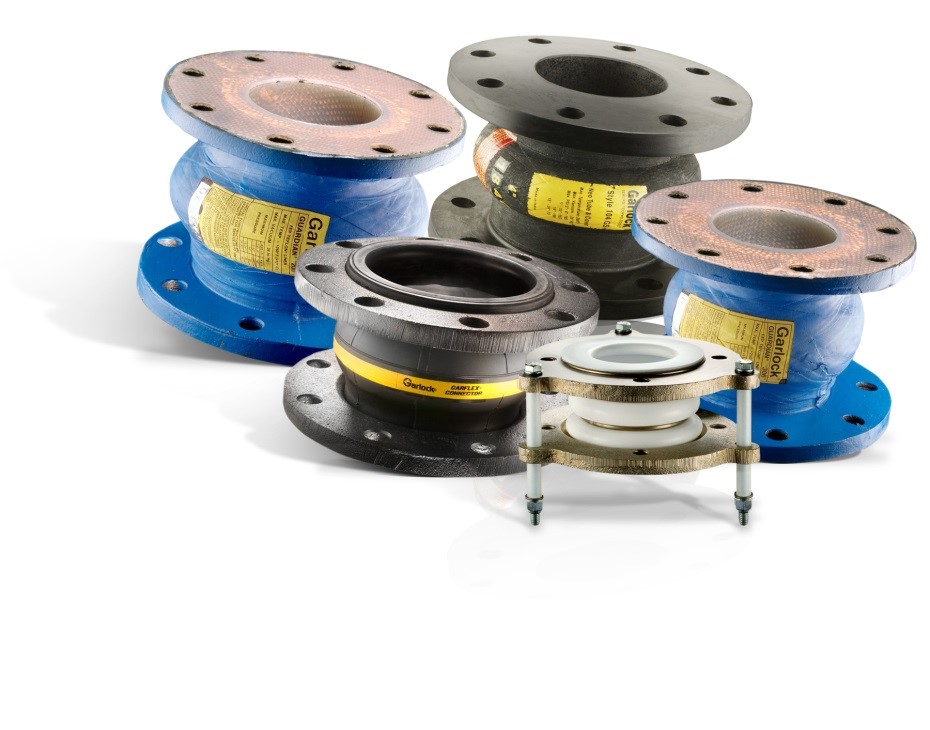
Gallagher Fluid Seals represents a number of expansion joint manufacturers, enabling us to provide an expansion joint for any piping system in any industry. One of our more popular expansion joints is the GUARDIAN® 306 EZ-FLO® by Garlock.
It’s a spool-type expansion joint featuring an FEP lining that is fused to the body of the expansion joint. The GUARDIAN® 306 EZ-FLO® is designed for the chemical processing and pulp & paper industries, where its ability to resist corrosive attack at normal and elevated temperatures and pressures is unequaled.
- January 17, 2017
There are a number of situations where your product or process may require segmented gaskets. Because of how sheets of gasket material are manufactured, some pieces of machinery are too big to utilize a single-piece gasket.
But you can also use segmented gaskets to get better yield from a sheet of gasketing material, minimizing the waste generated with centers.
- January 12, 2017
Article re-posted with permission from Parker Hannifin Sealing & Shielding Team. Original content can be found on Parker’s Blog.
_______________________
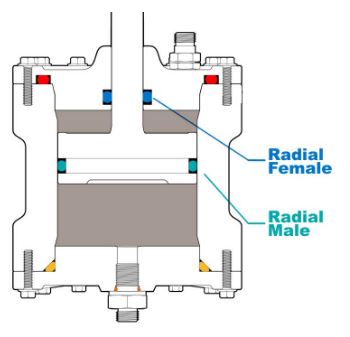
O-Rings are still considered the “go-to” sealing element in many applications. They can seal a wide range of pressures, temperatures, and tolerances. They also require very little room, are readily available, and easily sourced. But there are applications that may be better suited with an alternate type of seal, such as a double chamfer radial seal.
In a recent blog post, our partners at Parker discussed the advantages of using a double chamfer radial seal.
- January 10, 2017
GORE® Gasket Tape is a 100% ePTFE form-in-place gasket that delivers worry-free sealing performance for large steel flanges (Series 500) and large glass-lined steel equipment (Series 1000). While this product has a number of advantages, GORE® has now made their gasket tape line even easier to use.
Improved installation-aid adhesive.GORE® has upgraded the removable adhesive backer on GORE® Gasket Tape Series 500 and Series 1000 to a new higher strength material. This ensures that when the backer is removed at installation, it peels away in one easy-to-remove piece.
- January 05, 2017
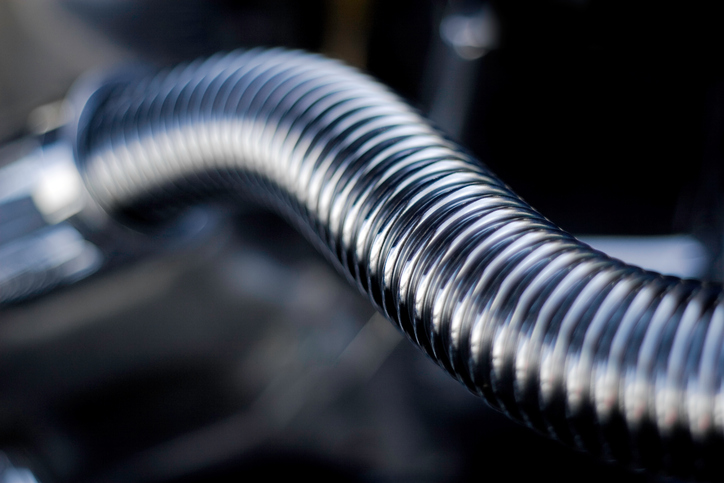
There are many factors to be considered when choosing the right type of hose for your application. There are many different types of hose available on the market. They include metal, rubber, composite, PTFE and fabric. The decision of which hose type to buy depends on the application for which the hose is being used.
Metal hose is ideal for absorbing vibration, misalignment correction, thermal expansion or contraction of piping systems, and protecting equipment from excess motion. Typically, metal hose is used when no other (non-metallic) constructed hose will work. In other words, metal hose is used as a last resort.
Here are some of the factors that should alert you it's time to use metal hose:
- January 03, 2017
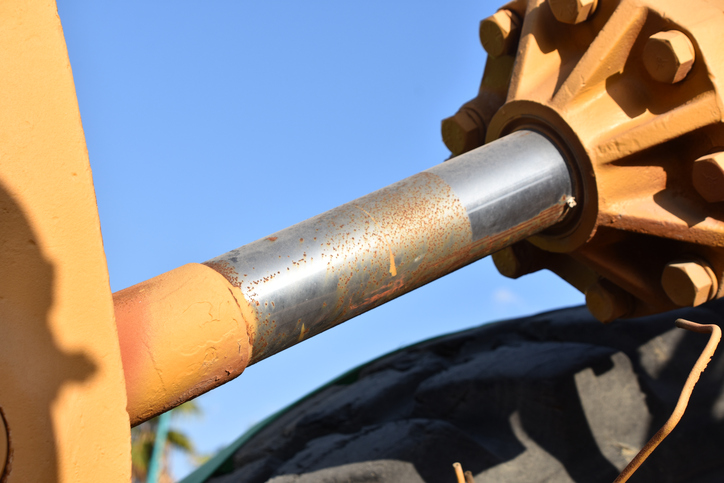
There are a multitude of options when it comes to selecting the most suitable sealing product for your application. And for those who are not familiar with sealing technology, the number of options can be really confusing. Gallagher can help.
We pride ourselves on being “The Seal Specialist”, and our engineering department is ready to help seal your toughest application. But where do you even start? Keep reading to learn more about some of the fundamentals of seal design and fluid power sealing theory from our partners at Parker.