Monthly Archives: January 2016
- January 28, 2016
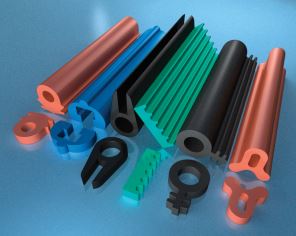
For 60 years Gallagher Fluid Seals has utilized its engineering and manufacturing expertise to provide the highest-quality standard and custom extruded rubber products to the most exacting tolerances and specifications.
- January 26, 2016
In our last few blog entries, we’ve discussed PTFE rotary seals and how they work. In this post, we’ll look at the fillers employed in PTFE resins.
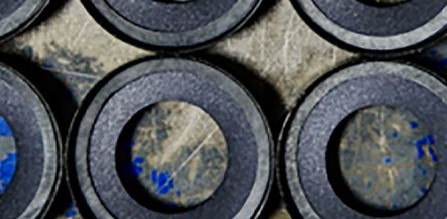
In its virgin form, PTFE resin isn’t the best sealing material for dynamic shaft applications. Therefore, different fillers are added to achieve the desired results. The most common fillers are fiberglass, graphite, carbon, coke flour and molybdenum, although any filler can be added to virgin PTFE resin as long as the material can withstand maximum sintering temperature of 710-730 degrees F.
In order to develop lip seal products properly from PTFE resins, it is vital that the engineer understands the favorable and unfavorable characteristics of the resin.
- January 19, 2016
Kalrez® parts made from compounds 6221 and 6230 provide superior chemical resistance and low contamination from extractables in pharmaceutical and food handling applications where FDA compliance is required. Compounds 6221 and 6230 are especially suited for Water For Injection (WFI) systems, Steam-in-Place (SIP) cleaning and other critical systems,
Unlike other elastomeric seals made with FDA compliant elastomers, Kalrez perfluoroelastomer parts are thermally stable up to 260°C (500°F), permitting use in applications such as Stage II Sterilization processes, where other elastomers lose their sealing capabilities.
- January 14, 2016
In our last blog post, we talked about some of the benefits and uses of PTFE rotary lip seals.
But how do PTFE rotary seals work? In this post, we’ll try to answer that question in more detail.
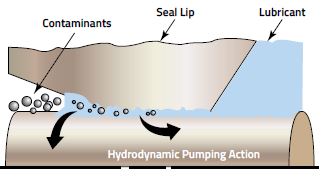
Rotary shaft seals work by squeezing and maintaining lubricant in a slim layer between the lip and the shaft. Sealing is aided by the hydrodynamic action caused by the rotating shaft, which creates a slight pump action.
- January 12, 2016
PTFE resin was discovered in 1938, but it wasn’t until the 1950s that it gained notice as a possible rotary lip seal material. However, PTFE (polytetrafluoroethylene) seals fell out of favor in the 1950s and 1960s, as they were shown to be unreliable performers in a number of applications.
In more recent decades, there has been significant progress in the areas of PTFE lip seal design and material processing.